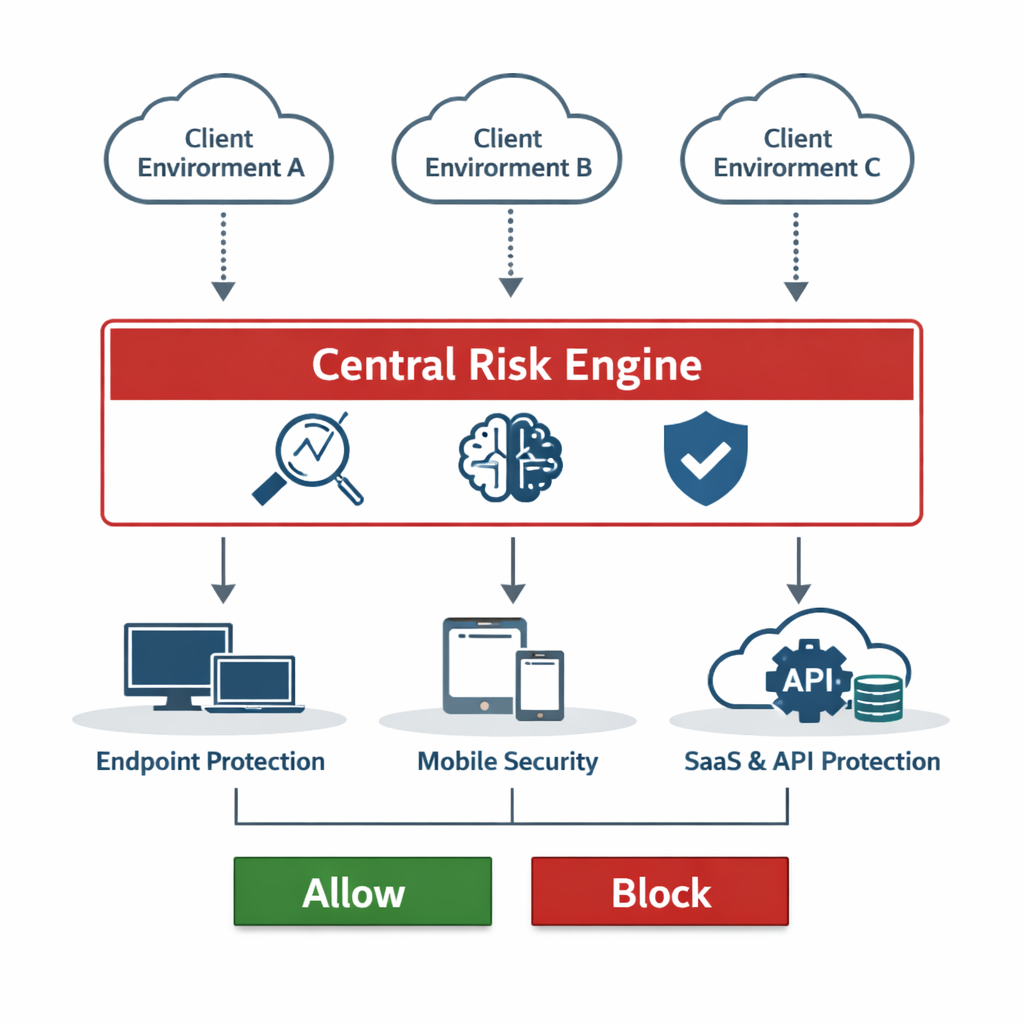
In organizations operating under a managed service model, the security layer is not solely operated internally but is administered externally, often across multiple customer environments. This structure changes the responsibility model, the control points, and the way protection mechanisms are implemented.
In modern phishing campaigns, the critical event is not the receipt of the message but the user action – the interaction with the malicious asset.
This interaction may include clicking a link, downloading a file, opening an external document, scanning a QR code, submitting credentials on a spoofed page, granting OAuth permissions, etc.
At this point, exposure transitions from potential to actual. Therefore, the protection mechanism must operate in real time, precisely at the moment of interaction.