RedFox Enterprise Security RedFox Enterprise Solutions
  • OUR SOLUTIONS
    PhishIQ Plus PhishIQ API PhishAgent Desktop Mobile Phishing Defender
  • RESOURCES
    Blog Knowledge Hub

The Pre-Click Layer: An Architecture for Prevention Before Interaction

The Structural Limitation of Click-Time Security

Most phishing protection solutions operate at the moment of user interaction. The implicit assumption is that the system will inspect and analyze the destination once the user clicks.

However, in distributed, SaaS-driven, and highly dynamic environments, this model positions security in a reactive posture rather than a control posture.

Once the user clicks:

  • An outbound connection is initiated
  • Malicious infrastructure is engaged
  • A browser session may be exposed
  • A critical time window opens

Even if the decision is made quickly, the transition to interaction has already occurred.

The architectural implication is clear: Click-time is a late control point.
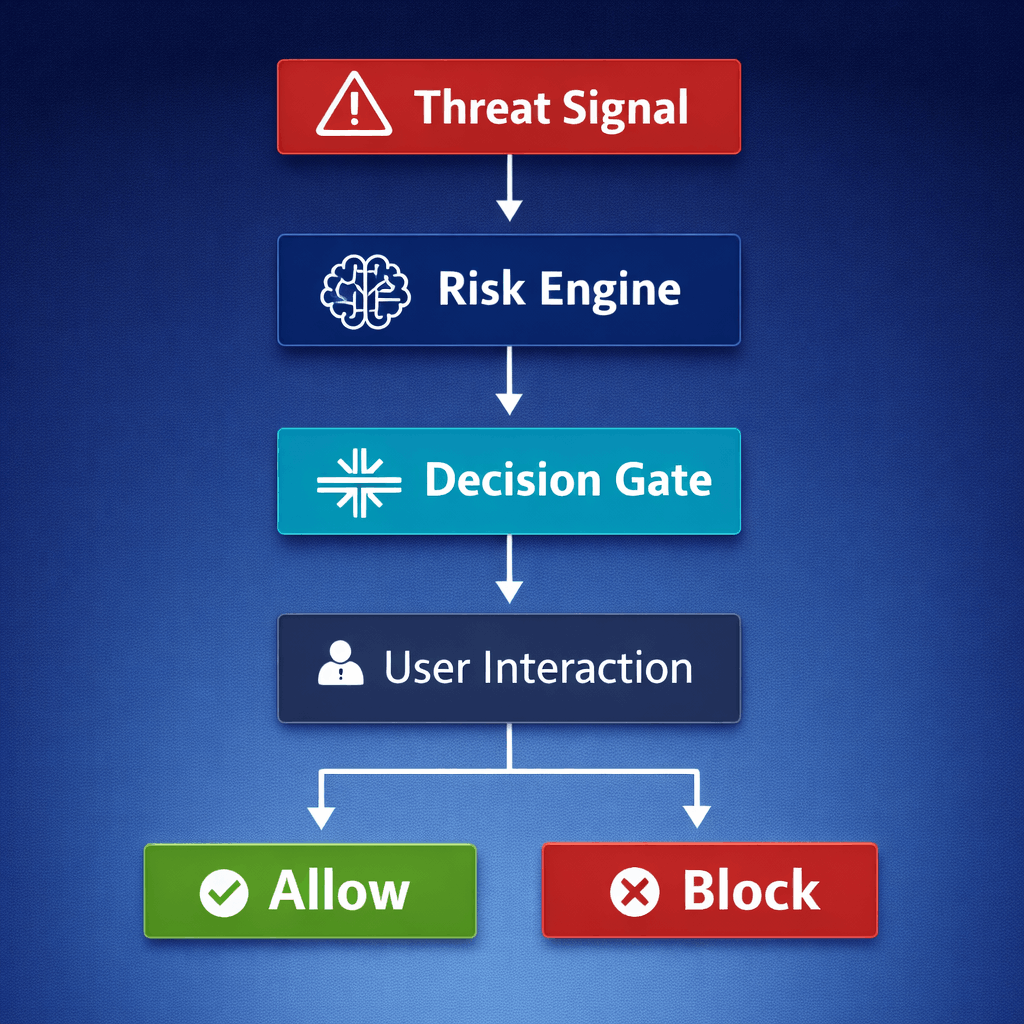
Shifting the Control Point to Pre-Interaction

The Pre-Click layer moves the decision mechanism before user action.

Instead of:
User Click → Inspection → Decision

The model becomes:
Threat Signal → Risk Modeling → User Exposure → Controlled Interaction

This distinction is not semantic. It fundamentally changes the placement of control within the architecture.

In a Pre-Click model:

  • Links are analyzed at distribution time
  • Domains are risk-scored before active exposure
  • Redirect chains are mapped in advance
  • Risk is calculated before user action occurs

As a result, when the user encounters the object, the decision already exists.

Pre-click vs click-time control flow

Risk Intelligence as the Foundation of the Pre-Click Layer

This layer relies on a combination of:

  • Structural URL analysis
  • Detection of dynamic infrastructure patterns
  • Campaign-level correlation
  • Behavioral modeling
  • Machine learning-driven analytics

The focus is not on blocking a domain after damage is observed, but on identifying risk as it emerges.

In an environment where domains are created and rotated within hours, reactive blocklists are insufficient. What is required is a mechanism capable of identifying structural and infrastructural anomalies during their formation.

Reducing the Exposure Window

In a click-time model, the risk window opens at the moment of interaction and closes once a decision is made.

In a Pre-Click model, the exposure window is minimized because the decision precedes interaction.

The implications are significant:

  • No initial page rendering
  • No browser session established with malicious infrastructure
  • No credential submission attempt
  • No early-stage artifacts created

Security does not respond to an event. It prevents the event from materializing.

Architectural Implications for Enterprises

Implementing a Pre-Click layer requires:

Inspection Before Presentation

Analysis at the email, SaaS, or API level before a link becomes an interactive entity.

Continuous Risk Engine

A risk engine operating persistently, not only at interaction time.

Separation Between Analysis and Enforcement

Risk assessment may be centralized, but enforcement occurs at the exposure point.

High Scalability

Preemptive inspection increases the volume of analyzed objects and demands efficient, distributed architecture.

From Reactive Security to Preemptive Control

Reactive security assumes that an event will occur and can be stopped in time.

The Pre-Click layer operates on the premise that the time window is too narrow to rely on post-action response.

The paradigm shifts from:

Detection → Response
to:
Risk Identification → Controlled Exposure

Conclusion

In an era of short-lived, distributed, and infrastructure-driven phishing attacks, the control point cannot remain at the moment of click.

The Pre-Click layer represents an architectural shift from reactive defense to preventive control, where risk is identified and modeled before user interaction.

Real-Time Phishing Protection is not defined solely by response speed. Its true value lies in the ability to operate before the first user action occurs.

← Back to Knowledge Hub

Contact Info

+66-91-7100137

contact@ntrigo.com

Our Main Office

32, 6 Surasak Road, Bangrak,
Bangkok 10500 Thailand

Get in Touch

Ready to protect your organization?

Contact Us Now

(c) RedFox Enterprise Solutions by NTrigo | Privacy Policy | Terms of Use | Trust & Security

LinkedIn Facebook